-
Shipping Discount
-
Loyalty Rewards
-
Member-Only Pricing
-
$0 Restocking Fees
Register now to become a member and enjoy exclusive member pricing at VIP Club.
As a VIP member, you earn 1 point for every $1 you spend. Every 100 points is worth $1 off any future order.
To see your reward points and use them as a discount, please sign in.
Compatible with the following equipment:
KOMATSU
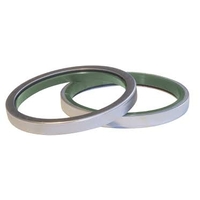
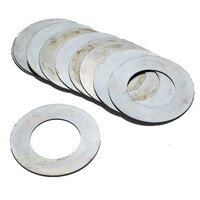
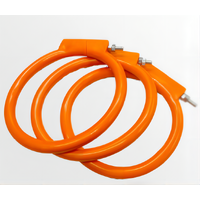
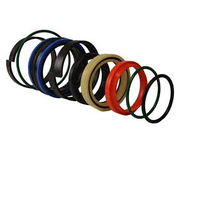
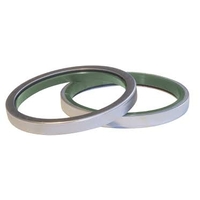
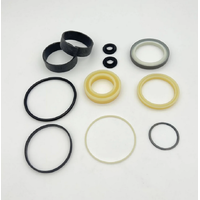
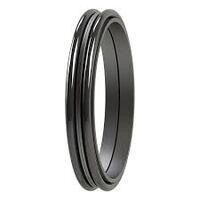
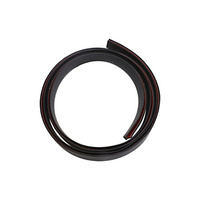
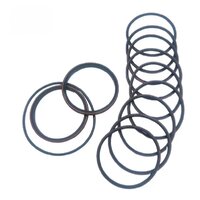
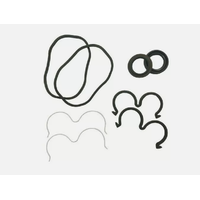
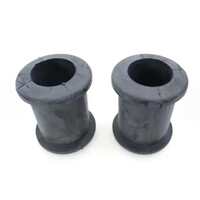
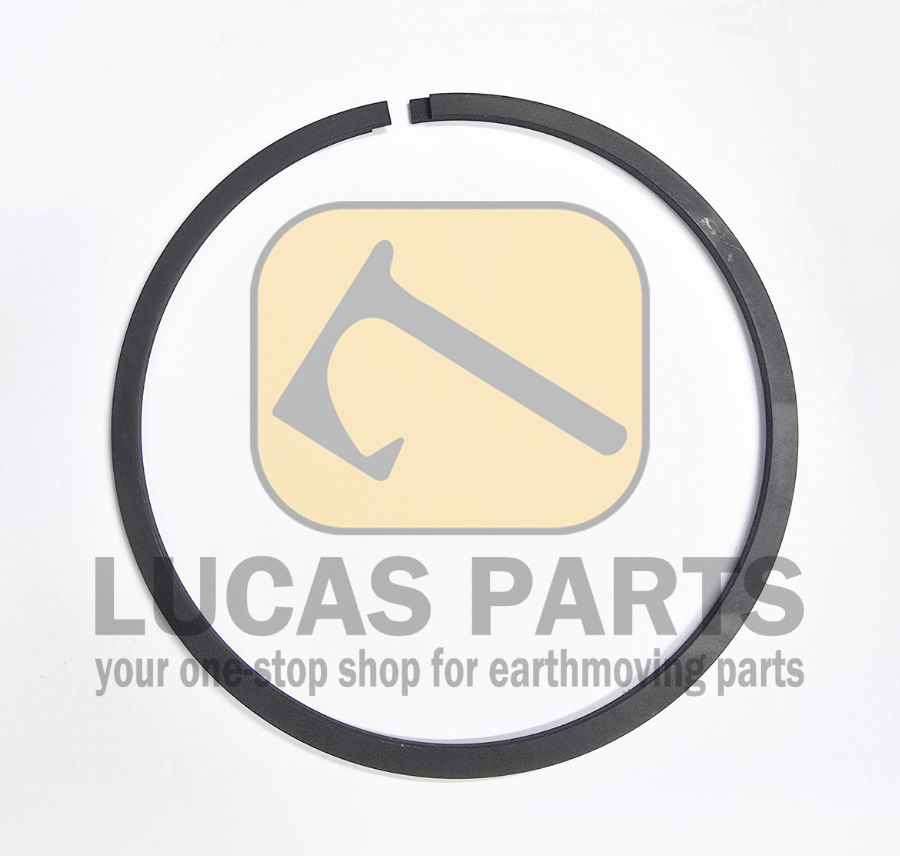
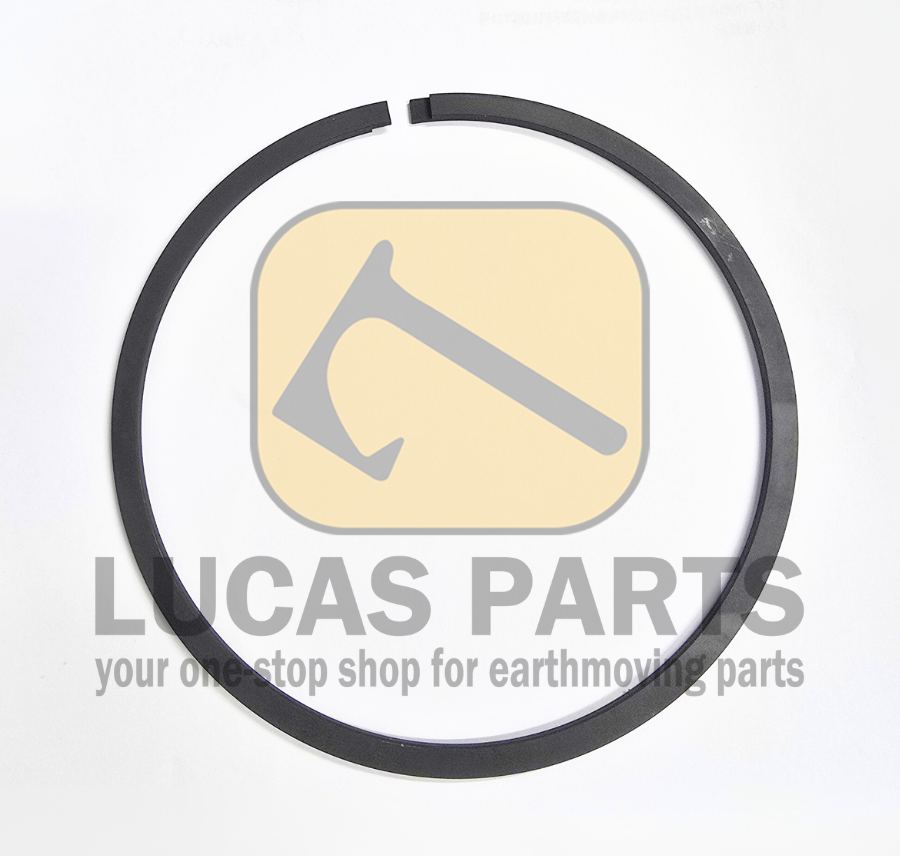
In hydraulic systems—specifically on heavy machinery like excavators—a backup ring is a rigid or semi-rigid ring designed to support a softer sealing element (like an O-ring or U-cup).
While the boom, arm, and bucket cylinders perform different mechanical tasks, the internal hydraulic sealing principles are the same.
Hydraulic cylinders operate under immense pressure. When a cylinder is pushed to its limit, the soft rubber of an O-ring wants to behave like a liquid and squeeze into the tiny clearance gap between metal components (the piston and the cylinder wall, or the rod and the head). This is called extrusion.
The backup ring acts as a physical barrier to block that gap.
The Sandwich Effect: In a high-pressure application, the backup ring is placed on the "low-pressure" side of the primary seal.
Pressure Resistance: When hydraulic fluid hits the primary seal, it pushes the seal against the backup ring. Because the backup ring is made of a harder material (like PTFE/Teflon, Nylon, or hard plastic), it does not deform or extrude, keeping the primary seal in its proper seat.
Bi-directional Support: If the cylinder is double-acting (moving in both directions under pressure), you will often find a backup ring on both sides of the O-ring.
PTFE (Teflon): The most common due to low friction and high temperature resistance.
NBR (Hard Nitrile): Used for standard applications where flexibility during installation is needed.
PEEK: Used in extreme high-pressure environments where standard plastics might fail.
If a backup ring wears out or is installed incorrectly (e.g., backwards or spiraled), the primary seal will quickly fail. This leads to:
Internal Leaks: The cylinder "drifts" (e.g., the bucket slowly opens even when you aren't touching the controls).
External Leaks: Hydraulic fluid leaking from the rod end of the boom or arm.
Contamination: Shredded bits of the backup ring entering the hydraulic circuit, which can damage valves and pumps.
When rebuilding a cylinder, backup rings often look like they are "too big" or "spiraled" (split-cut). This is intentional to allow them to be stretched over the piston or rod without snapping. Always ensure the "concave" side (if it has one) faces the O-ring to cradle it properly.
| SKU | HCSKP1002 |
| Shipping Weight | 1.0000kg |
| Shipping Width | 0.100m |
| Shipping Height | 0.101m |
| Shipping Length | 0.100m |
| Shipping Cubic | 0.001010000m3 |
| Unit Of Measure | kit |
Help other LUCAS PARTS users shop smarter by writing reviews for products you have purchased.
$365.00 $170.00
Subscribe to our newsletter